

UNBOUND: Education in the Age of Disruption
Analysis, resources, and field insights through the lens of Sustainable Learning.
Get UNBOUND delivered straight to your inbox
Please subscribe and join me in the conversation.
Sustainable Learning Begins with the Design of Interaction
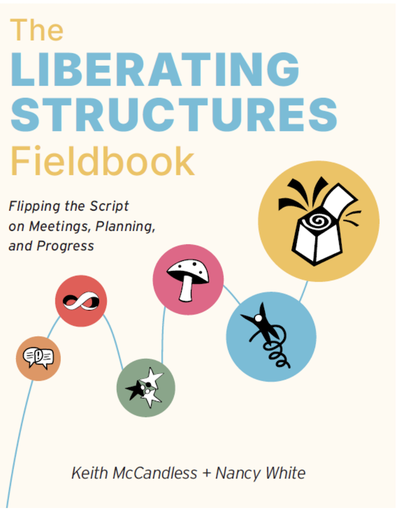
Nancy White, Keith McCandless, Henri Lipmanowicz, and the contributors to the new Liberating Structures Fieldbook have given education a tool it has needed for a long time. The Sustainable Learning Framework and Liberating Structures are two sides of the same coin — one naming what a learning ecosystem needs to stay adaptive, the other offering the tools for designing the interactions that build it. Good frameworks begin in conversation, and success is the result of an ongoing exchange between frameworks, practice, and data. Read the full reflection on why interaction itself deserves to be treated as infrastructure.


The Breach Is Not the Story
A ransomware attack on Canvas during final exams exposed more than a cybersecurity vulnerability. It revealed the systemic risks of building essential learning relationships inside concentrated commercial platforms. This piece examines the breach through the lens of Digital Stewardship, institutional dependency, and the growing divide between platforms optimized for scale and infrastructure governed for public trust.

Pedagogy and Governance: What Responsible AI Adoption Requires
Responsible AI adoption in education requires two things. Both are necessary. Neither is sufficient alone.
The first is pedagogy. Does the tool strengthen the student-teacher-content relationship, or weaken it? Does it support the cognitive work that produces learning, or displace it? Brookings, UNESCO, and UNICEF have devoted serious resources to these questions. AI enriches learning only under specific conditions, and those conditions require deliberate design.
The second is governance. Who controls the environment in which pedagogy occurs? What has the institution agreed to before the tool ever reached a classroom? Does it retain the capacity to change direction, or has it ceded that capacity to a vendor without realizing it?
These are equally the right questions. The field has not been asking them at anything close to the same scale.

How Do I Teach This Paper: What Education Research Can Learn from Neuroscience and Why It Matters
No editorially independent publication in education connects the research community to itself and to the practitioners whose work it is supposed to inform — across formats, across disagreements, and including critical coverage of its own structural conditions.
Neuroscience built that infrastructure when it created The Transmitter and its recurring series "How to Teach This Paper" — a model for walking practitioners through not just what a study found, but how it was designed, what the methods assume, and what it would take to apply it responsibly. Education has not.

Data Storytelling in a World of Knowledge Asymmetry
The problem is not the absence of data. It is the inability of systems to turn evidence into instructional improvement. Two reports. Two contexts. One structural failure.
This week in UNBOUND, a study of data storytelling in U.S. data science classrooms and a policy brief on foundational learning data in Kenya reveal the same challenge: education systems often generate evidence but fail to translate it into changes in teaching.

When the Tool Becomes the Threat: What UNICEF's Data Governance Report Reveals About Digital Stewardship
A single 2025 cyberattack on an EdTech company exposed student data across 80 Canadian districts and into the U.S.—a case UNICEF Innocenti says reflects a broader pattern, not an anomaly.
Their new global data governance report confirms what systems have long signaled: tools are optimized for adoption, not learning—and the greatest risks fall on the most vulnerable students.
This UNBOUND piece reads the findings through a Digital Stewardship lens—what policy is finally naming, and what practitioners still need to do.

Infrastructure, Not Emergency: When Rapid Response Becomes Core Capacity
When schools become battlegrounds, infrastructure reveals itself. Across Chicago, Gaza, and Haiti, rapid response networks demonstrate what education looks like when systems are designed for volatility as a baseline. The question isn't whether these networks are needed—it's whether we recognize them as core capacity before millions more students lose access to learning.

When “Open” Becomes Extraction
When “open” becomes extraction: the OER–AI conundrum reveals what happens when knowledge is treated as free input rather than shared infrastructure—and why digital stewardship now matters.

Beyond Digital as Usual: Digital Stewardship as Public Infrastructure
Last week I promised an AI field guide. What arrived instead was a manifesto.
This week on UNBOUND, I explore what UNICEF’s strategy gets right—and why digital stewardship must extend beyond tools to include ideas, attribution, and faithful co-creation.

Public Good AI needed to ensure AI strengthens—not weakens—education.
If AI were built as a public good —transparent, governed, and accessible—an entirely new class of educational problems would become solvable. Most importantly, we could finally address a challenge that has undermined learning for decades: how to keep education functioning when systems around it fail.

Welcome to Unbound
UNBOUND explores education in the age of disruption through the lens of Sustainable Learning. You'll find analysis alongside practical resources—some pieces examine system shifts, others stay close to practice, all shaped by real constraints. I hope you'll subscribe, comment, or share what resonates.