
Infrastructure, Not Emergency: When Rapid Response Becomes Core Capacity
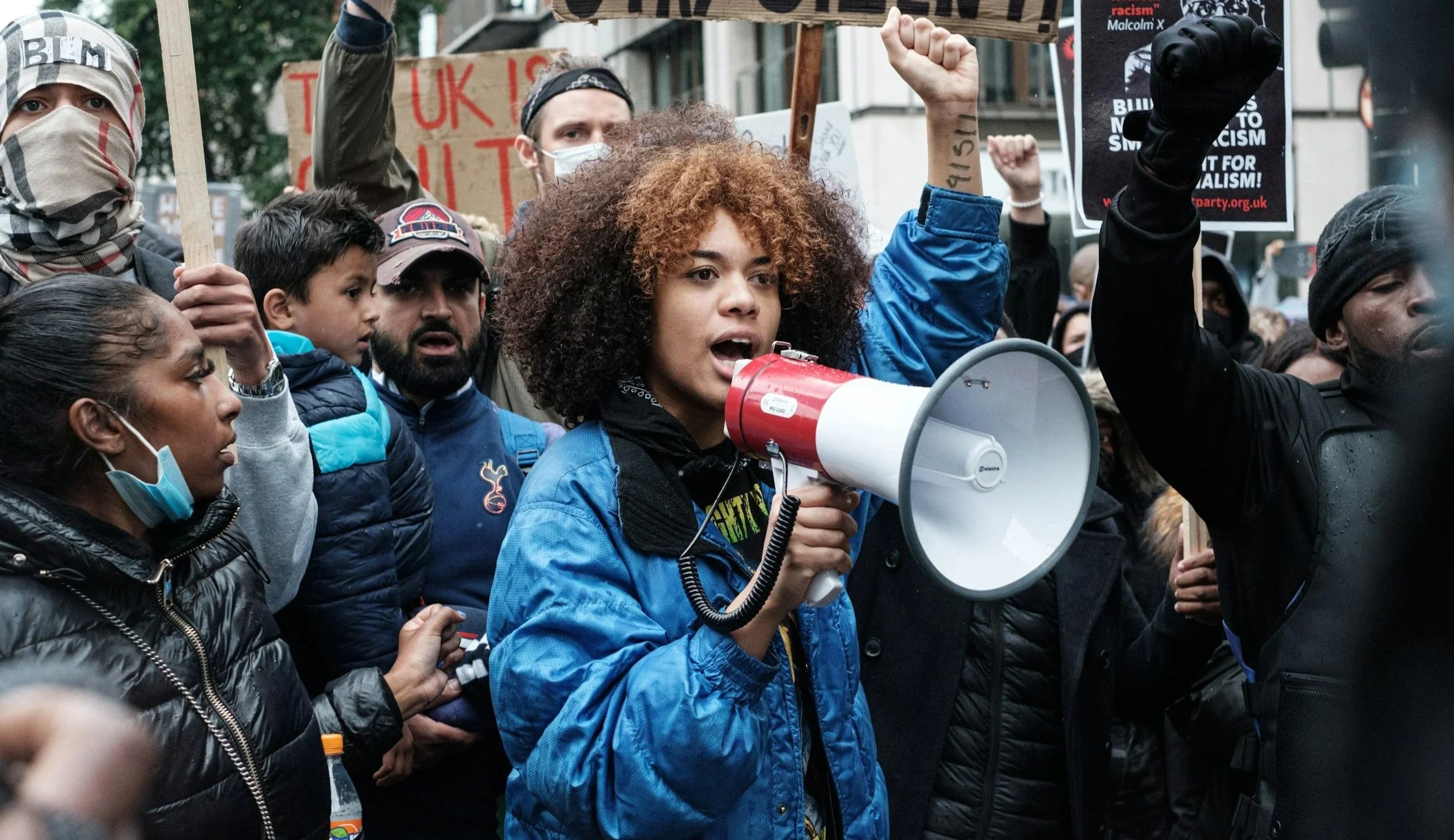
Rapid-response education protocols were developed for emergencies. In a world where instability is routine, they must become core infrastructure.
Across three continents, educators are building the capacity to sustain learning when immigration raids, armed violence, or mass displacement make traditional schooling impossible. These rapid response approaches reveal a fundamental truth: for millions of students, volatility isn’t a temporary disruption. It’s the baseline.
The question isn't whether rapid response will be needed. The question is whether education systems recognize it as core infrastructure rather than a crisis exception.
Chicago: Schools as Sanctuary
Educator Carolyn Brown was meeting with counselors when the call came. ICE agents were outside Thomas Kelly College Prep in Chicago's Little Village. By the time she reached the street, agents had taken a woman and her 17-year-old daughter, an American citizen. Parents were pulling students from school. A helicopter circled overhead.
This was January 2025, after the Trump administration rescinded the sensitive locations policy that had protected schools, hospitals, and churches from immigration enforcement. ICE operations now target people at schools, workplaces, churches, and routine check-ins. Research shows raids in early 2025 coincided with a 22 percent increase in daily student absences, with particularly large increases among the youngest students.
Chicago's response operates on three tiers. Every school has proactive plans—staff training, response teams, and posted signs indicating ICE is not permitted on campus. Schools with higher immigrant populations add foot patrols during arrival and dismissal. The third tier is citywide: first-response networks ready to mobilize within minutes if ICE appears at any school, as Labor Notes documented.
The United Teachers Los Angeles activated sanctuary protocols that, between June 2025 and January 2026, coordinated resources for nearly 2,400 community members through the Los Angeles Rapid Response Network. In Lincoln Square, neighbors formed walking school buses, equipped with orange whistles to warn of ICE presence. The Colorado Rapid Response Network operates a statewide 24/7 hotline (1-844-864-8341) that dispatches trained volunteers to document events and inform individuals of their rights.
Community organization FUERZA in LA provides street watchers, food delivery, and emergency kits for kids. Case management teams support families when members are detained. Fundraising teams provide $500 grants to families who've lost breadwinners. This is education infrastructure beyond the building: the systems that keep students fed, protected, and connected to learning when campuses are unsafe.
Be Prepared: Legal Aid Center Rapid Response Toolkit
Gaza: Learning Under Destruction
More than 630,000 Palestinian children have missed two full academic years. The crisis extends beyond K–12: 88,000 university students have had their education disrupted, and most higher education campuses have been damaged or destroyed.
UNICEF expanded learning spaces to 143 centers for school-aged children, reaching 15% with foundational learning. UNRWA provided online schooling via WhatsApp to 180,000 students, though only those with devices and internet could participate.
UNESCO’s Gaza Virtual Campus allows universities to recreate academic environments—coursework, interactive learning, assessments—even when physical campuses remain closed. Twenty thousand students resumed coursework in the first phase. The platform is expanding to serve displaced university students.
Temporary Learning Spaces established through partnerships with local universities provide digital access and psychosocial support. Graduate student Zahra Al-Ewady explains the impact: “I can now sit for my online exams without worrying about internet or electricity cuts.”
Students brought mattresses instead of desks. Teachers cleared rubble so children could sit on the floor and learn. University students access digital campuses from displacement shelters and take exams during power outages.
The World Bank estimates $870 million in damage to Gaza’s education sector. Ninety-five percent of educational facilities have been damaged or destroyed.
Learning continuity here requires infrastructure that operates across the full K–16+ spectrum when physical campuses are rubble and classrooms double as shelters.
Before the war, Gaza had a 97% literacy rate and a 45% higher education enrollment rate. Education was completely free at the primary and secondary stages. The war didn't just destroy buildings. It destroyed educational justice—the infrastructure that made learning accessible from early childhood through university.
Haiti: The Forgotten Crisis
In January 2025, armed groups destroyed 47 schools in Haiti's capital in a single month. More than 1,600 schools have closed, disrupting learning for over 243,000 students. One in seven children is now out of school. Armed gangs control 85% of Port-au-Prince. More than 748,000 children were internally displaced in September 2025—double the previous year's figure.
Children must cross gang-controlled zones to reach school, risking crossfire and forced recruitment. In one 2024 incident, 3,500 children were trapped in two schools for four days. Videos captured piercing screams of children on floors, motionless with fear.
UNICEF is currently providing catch-up classes, rehabilitating damaged schools, establishing temporary learning spaces, and coordinating mental health support for children affected by violence and displacement. To sustain education for 600,000 children, the organization has requested $38 million. As of mid-2025, only 5% of that appeal has been funded. Haiti’s broader $908 million humanitarian response plan was only 8% funded as of June 2025—the lowest level of funding globally.
BuildOn operates differently. In 2024, it built a new school in Journu, serving 285 students—150 of whom were previously out of school. Its Enroll program provides accelerated learning, supplies, meals, and community engagement. The organization doesn't wait for funding cycles. It builds capacity where systems have collapsed.
By early 2025, one million Haitians had been displaced by gang violence. Many fled to rural towns, overburdening local schools. In the Grand South, 103,000 displaced school-aged children arrived simultaneously. A rapid response here means absorbing capacity shocks that exceed what traditional planning can accommodate.
The Global Infrastructure Gap
These aren't isolated crises. They're concurrent, revealing how education systems function under pressure. Globally, 234 million crisis-affected children require urgent educational support, including 85 million who are out of school. Climate-related hazards interrupted schooling for 242 million children in 2024 alone. Over 50 million children have been forcibly displaced. Nearly half of all school-age refugee children are out of school.
The Global Education Cluster defines rapid response as limited to three months or less and restricted to geographic areas affected by humanitarian crises. But for millions of students, this timeline doesn't match their reality. Volatility isn't temporary. It's the operating environment.
UNESCO's strategic framework for migration, displacement, emergencies, and education recognizes this shift. Between 2020 and 2024, UNESCO implemented more than 320 education-emergency initiatives across five regions, reaching approximately 42.5 million people. The framework bridges humanitarian, development, and peacebuilding approaches, treating immediate actions—mental health support, data enhancement, infrastructure rebuilding—as integrated rather than sequential.
UNICEF's approach to digital learning in emergencies validates what the Sustainable Learning Framework anticipated: systems must design for volatility as a baseline. This means establishing hotlines staffed 24/7. Training educators to recognize enforcement agents while protecting students. Creating protective presence during high-risk times. Building digital platforms that allow universities to operate when physical campuses are destroyed. Coordinating rapid deployment of temporary learning spaces, mental health support, and accelerated learning programs.
Through the Lens of Sustainable Learning
This is what the Sustainable Learning Framework describes: infrastructure designed for volatility, capacity-building over dependency creation, public-good platforms over private vendor solutions. The framework called for this shift before institutions recognized the need.
Chicago's teachers didn't wait for federal policy to protect sensitive locations. They built three-tier response systems that mobilize within minutes. Gaza's universities didn't wait for reconstruction funding. They built virtual campuses, allowing students to continue coursework when physical buildings remained closed. Haiti's organizations didn't wait for full funding. They built capacity where systems collapsed.
When UNICEF's Digital Education Strategy 2025-2030 emphasizes offline-capable platforms and crisis-specific adaptations, when UNESCO's strategic framework bridges humanitarian and development approaches, when the Global Education Cluster defines preparedness as evaluating supply lines and standardizing materials into kits, they validate what the framework positioned as a baseline years earlier.
The systems that sustain education under pressure are not built on assumptions of stability. They are designed for volatility. They treat immigration raids, armed violence, and displacement as operating conditions — not rare disruptions.
Sustainable education systems act before crises intensify: establishing 24/7 hotlines, training entire school communities in legal protections, governing digital platforms publicly, and integrating cash assistance and mental health support into core operations rather than separating them as auxiliary services.
For students facing ICE enforcement in Chicago, systematic destruction in Gaza, gang violence in Haiti—rapid response isn't temporary crisis management. It's how learning happens. The policy question isn't whether to build rapid response capacity. The question is whether education systems recognize it as infrastructure before millions more students lose access to learning.
When schools become battlegrounds, infrastructure reveals itself. The Sustainable Learning Framework provides the language to name what we're seeing: public-good-oriented, capacity-building, designed for the conditions that education systems actually face. These are the systems we need.
Rapid Response Tools: Quick-Start Resources
Know Your Rights & Emergency Planning Red Card: Know Your Rights (ILRC) - Pocket cards in multiple languages for ICE encounters. Family Emergency Plan Template (Legal Aid Justice Center) - Designate guardians, document contacts, prepare for detention ICE Watch Training Modules (ICIRR) - Weekly online trainings in English and Spanish
School-Level Implementation Sanctuary Schools Toolkit (Chicago Teachers Union) - Staff training protocols, communication systems, response teams. School Response Plan Template (Fugees Family) - Warrant verification, legal protections, code words for alerts. Education in Emergencies Preparedness Checklist (Global Education Cluster) - Supply evaluation, material kits, coordination structures
Rapid Response Coordination Statewide Hotline Model (Colorado RRN) - 24/7 dispatcher protocols, volunteer training, documentation systems. Community Defense Strategy Guide (Rapid Response Tucson) - Walking school buses, whistle protocols, neighborhood networks. Displacement Site Learning Spaces (UNICEF) - Offline-capable platforms, accelerated learning, psychosocial integration
Comprehensive Resources for System-Level Planning
School Defense & ICE Response Chicago Teachers Union: Defend Your School Community Under Threat of Occupation Colorado Rapid Response Network: 24/7 Hotline (1-844-864-8341) Fugees Family: ICE at School Response Plan for Educators (2025) Legal Aid Justice Center: Rapid Response Toolkit
Global Frameworks Global Education Cluster: Strengthening Rapid Education Response Toolkit UNICEF: Digital Learning in Emergencies and Fragile Contexts UNESCO: Strategic Framework for Migration, Displacement, Emergencies, and Education INEE: Minimum Standards for Education in Emergencies
Immediate Resources for Practitioners
School Defense & ICE Response Chicago Teachers Union: Defend Your School Community Under Threat of Occupation Colorado Rapid Response Network: 24/7 Hotline (1-844-864-8341) Fugees Family: ICE at School Response Plan for Educators (2025) Legal Aid Justice Center: Rapid Response Toolkit
Global Frameworks Global Education Cluster: Strengthening Rapid Education Response Toolkit UNICEF: Digital Learning in Emergencies and Fragile Contexts UNESCO: Strategic Framework for Migration, Displacement, Emergencies, and Education INEE: Minimum Standards for Education in Emergencies
